Our Story
From the Mediterranean to the Florida Frontier: The Story of the Minorcans
Few stories in American history are as dramatic, overlooked, or as enduring as the story of the Minorcans. It begins not in Florida, but in the Mediterranean — and it ends, against all odds, with a community that still impacts the culture of northeast Florida today.
The Grand Scheme
The story starts in 1767 with a meeting of the East Florida Society of London. They were a group of influential Britons who had adopted the custom of meeting monthly at the Shakespeare Head, a tavern in Covent Garden, London, where they discussed the prospects for founding estates in America. These speculative fires had been sparked by the pamphlets of Dr. William Stork, then further by writings of Dr. Andrew Turnbull.
During the British occupation of East Florida between 1763 and 1783, the British Parliament offered generous land grants to citizens who would cultivate silk, cotton, and indigo there. After an exploratory visit to East Florida, Turnbull returned to London early in 1767 and convinced wealthy partners to join him. He and two business associates acquired land grants of 20,000 acres each from unclaimed lands in East Florida in what became known as New Smyrna (The East Florida Society of London).
Now he needed workers.
In the early days of planning and beginning New Smyrna, the people were called “The Greeks” because Andrew Turnbull imagined that all his workers would come from what is known today as Greece. As time went on, whether they came from Greece, Italy, Corsica or elsewhere, they were known as Minorcans.
Recruitment and the Promise of a New Life in Florida
Farmers, fisherman, and trades people, the Minorcans came to East Florida in search of a new life full of opportunity and the promise of land. They were brought as indentured servants to build a colony in what became known as New Smyrna, East Florida. Things did not go according to plan…
Andrew Turnbull recruited approximately 1,100 Minorcans as indentured servants and added 200 more laborers from Greece and about 100 from Italy, France, Corsica, and Turkey. On April 17, 1768, Turnbull assembled his 1,403 colonists and set sail for East Florida.
Join The Minorcan Experience as we share the stories of these brave settlers and their descendants.
The Crossing and Landing
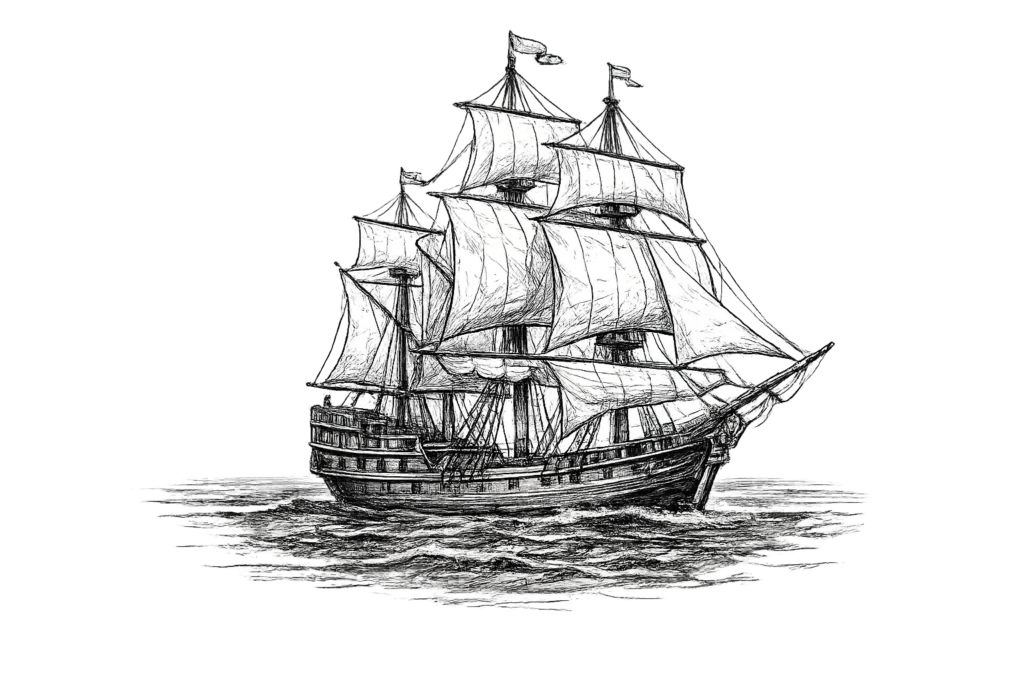
On April 17, 1768, after stopping in Gibraltar, the ships Charming Betsy, Elizabeth, Friendship, New Fortune, Henry and Carolina, Hope, American Soldier, and Betsey carried 1403 passengers.
The 70-day voyage across the Atlantic was brutal. Many died of scurvy and other illnesses. The first four ships landed in St. Augustine in June 1768. The other ships in early August. (Kenneth Beeson – Fromajadas and Indigo)
By the time they traveled the 70 miles from St. Augustine to New Smyrna in August, the number of colonists had been reduced to 1,255. And what greeted them was not the promise they had been sold.
Housing and accommodations were in place for only about 500. Palm huts were quickly constructed to provide temporary shelter and were still being used by some of the colonists a year after their arrival.
Nine Years in the Wilderness
What followed was nearly a decade of suffering that defies easy description. The New Smyrna colony was the largest colony on the North American continent, built for one undertaking out of raw subtropical wilderness with almost no infrastructure to support it.
The need to establish a working settlement was of the utmost importance. The work was relentless. “Moreover the hard work was fueled by improper food and questionable water. We can picture the settlers, bone weary, many half sick or even dying, taking communal food, then dragging to their crude, damp, insect-infested homes.” (Beeson)
The Florida climate compounded every hardship. After a long day’s work in the hot summer heat, mosquitoes visited the settlement at night, sometimes carrying malaria. Settlers wore rags and slept on bedding in poor condition. For the first couple of years they were forced to live in huts with sand floors. Disease was rampant. Other factors causing death included starvation, scurvy, dropsy, lack of sanitation, yellow fever, typhoid fever, and pneumonia.
Tensions grew between Turnbull and the colonists because of his neglect and the mistreatment by his overseers. When colonists attempted to protest or escape, they were punished. The East Florida courts ruled in favor of Turnbull and ordered the settlers to return to their indentures. They were, for all practical purposes, imprisoned.
By 1777, 964 Minorcans had died during the nine hard years at New Smyrna — more than two-thirds of all who had made the crossing.
The Walk to Freedom
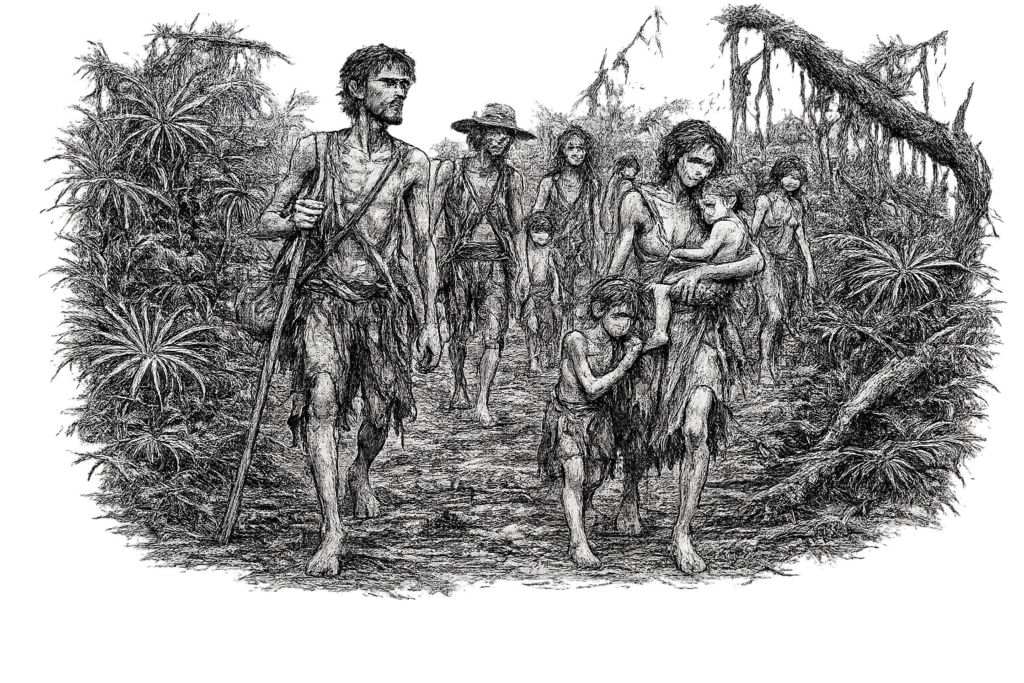
In the summer of 1777, the survivors, approximately 600 surviving men, women, and children, made a bold decision — with the permission of Governor Patrick Tonyn, they abandoned New Smyrna and walked north to St. Augustine. They traveled roughly seventy miles along the King’s Road, Florida’s colonial highway connecting New Smyrna to St. Augustine (Journal of the American Revolution).
Building a Community in St. Augustine
The Minorcans arrived in St. Augustine with only tattered clothing and the traditions they had carried from home. The survivors were known for their skills as fishermen, farmers, and craftsmen, and they significantly impacted the cultural fabric of St. Augustine (Tumblr).
They settled in the northwest section of the old walled city, in what became known as the Minorcan Quarter. Father Pedro Camps, who had accompanied the colonists and ministered to them throughout their ordeal, helped preserve their eighteenth-century history and culture. He continued to serve as their spiritual anchor until his death in 1790. A statue of Father Camps stands outside the Cathedral Basilica in the heart of St. Augustine.
Although some Minorcans fled with the loyalists and resettled in the Bahamas, Dominica, and Europe, most stayed behind — becoming Spanish subjects when Spain reclaimed Florida in 1783. Their roots in Florida were by then too deep to abandon.
A Legacy That Lives On
The Minorcans placed an indelible mark on the culture of northeast Florida. Enduring Minorcan surnames — Acosta, Andreu, Capo, Pacetti, Pellicer, Pomar, Triay, and Usina among them — remain common throughout the region today.
Their culinary traditions are perhaps their most flavorful legacy. The Minorcan community adopted the datil pepper, cultivated it for generations, and integrated it into signature dishes like Minorcan clam chowder and pilau. The datil pepper, similar in heat to the habanero, remains a living symbol of Minorcan identity.
The Minorcans did not arrive as conquerors or colonists by choice. They came as laborers, suffered deeply, and rebuilt their lives through resilience and faith. Their legacy is marked not by grand monuments, but by homes, churches, cemeteries, and family names woven into the fabric of America’s oldest city (Journal of the American Revolution).
Their story is not a footnote. It is a foundation.