A Cohesive Group – what kept them together.
The group, including the Greeks and Italians, remained almost entirely endogamous, that is, contracting marriage only within their own group. There were a few exceptions, including the marriage of Leonora Genopoly, a daughter of a Greek family from Mani, to Anthony Hinsman, a Britisher, on December 21,1784. A few others may have married outside the Catholic church and departed with the British, leaving no record.
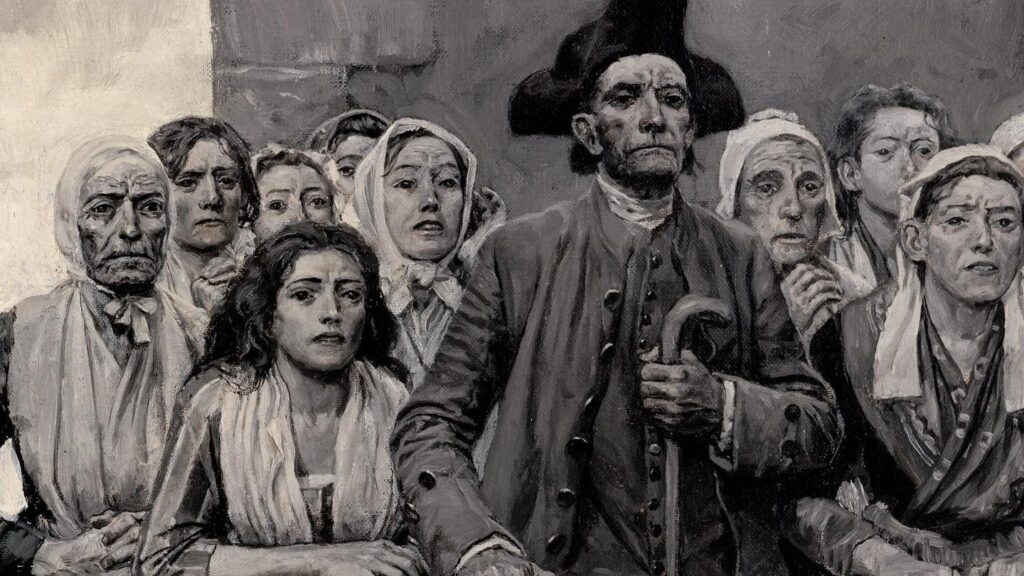
By 1786, with information now available from Spanish censuses, we find several others married outside the Minorcan group. For example Paula de Torres, a widow from Cuidadela had married
Antonio Montes de Oca, a returnee from the first Spanish period and a shoemaker by trade. She and her two New Smyrna-born children, one a crippled boy of sixteen years, lived with him near the heart of the Minorcan quarter. This reluctance to marry out of the group is the more remarkable considering that British St. Augustine was largely male.
Leitch Wright (1975:35) believes that “the ratio of men to women may have been two or three to one and possibly higher.” Language, religion, and spatial organization unquestionably promoted the group’s uninterrupted unity. Not a little of the cohesiveness was promoted by the reestablishment of the Church of San Pedro. Lacking other space, the down stairs of one of the old residences standing in the heart of the quarter was commandeered for use. . . However, the Minorcans continued to function as an informal parish within a parish until Father Camps’ death in 1790.
Mullet On The Beach – Patricia C. Griffin
Artwork – New York Public Media